We proudly support USARK because ethical husbandry and keeper advocacy go hand in hand. USARK protects the herpetoculture community and our cold-blooded family members through science-based legislation, education, and proactive defense of responsible animal care.
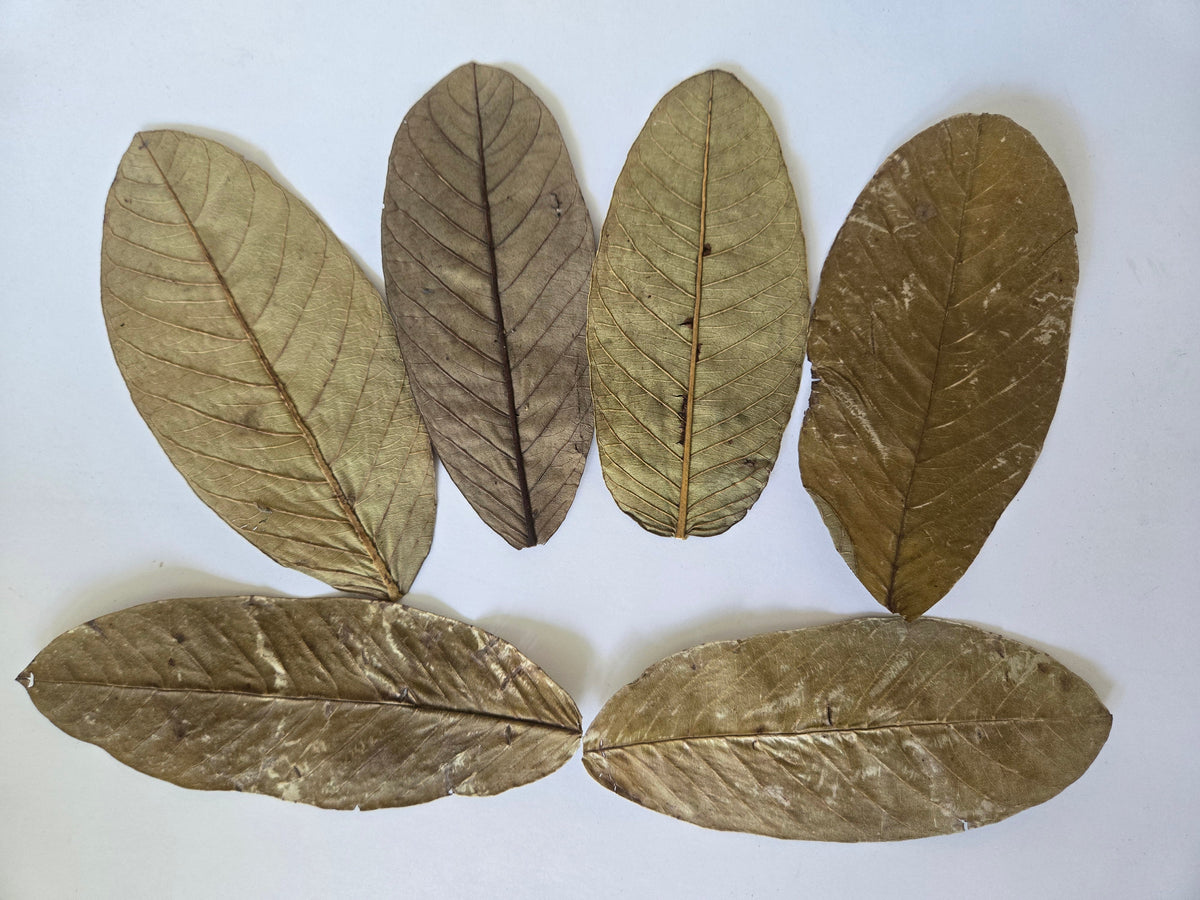
Indian Guava Leaves (Psidium guajava) 25 Count
Indian Guava Leaves (Psidium guajava) 25 Count
Regular price
$10.95 USD
Regular price
Sale price
$10.95 USD
Shipping calculated at checkout.
Quantity
Couldn't load pickup availability
Build an authentic, slow-decomposing forest floor or blackwater biotope with all-natural Dried Guava Leaves. Naturally harvested from the Psidium guajava tree, these thick, durable leaves provide enduring ground shelter, supplemental nutrition, and natural antibacterial conditioning for bioactive terrariums, isopod colonies, and freshwater aquariums.
Substantially thicker and more durable than traditional Indian almond (catappa) leaves, dried Guava leaves (Psidium guajava) are prized by herpetoculturists and aquarists for their environmental longevity. In humid bioactive terrariums, they serve as a resilient leaf litter foundation that resists rapid breakdown, establishing essential ground-level cover, moisture gradients, and a sustained food source for clean-up crews like isopods and springtails. Submerged in freshwater aquascapes, Guava leaves release a gentle, controlled wash of tannins and humic substances that naturally buffer pH, inhibit opportunistic bacteria and fungi, and reduce stress in softwater species like Bettas, Discus, and Tetras—all while cultivating a nutrient-dense biofilm grazing ground for dwarf shrimp and delicate fry.
Key Features
- Heavy-Duty Structural Durability: Dense, leathery leaf composition breaks down significantly slower than standard leaf litter, maintaining ground-level micro-caverns and humidity pockets for months.
- Natural Antibacterial & Antifungal Properties: Slowly releases protective humic compounds that help deter common pathogens, supporting immune health and reducing stress in fish and amphibians.
- Controlled, Low-Tannin Leaching: Imparts a mild, warm amber tint and gentle pH buffering without muddying water clarity or causing sudden parameter shifts.
- Biofilm Hub & Isopod Food Source: Serves as a persistent graze-pad for biofilm accumulation, nourishing dwarf shrimp, micro-fry, springtails, and isopods as the leaf gradually softens.
- 100% Organically Sourced & Sun-Dried: Harvested in India without pesticides, fertilizers, or synthetic additives—completely safe for sensitive invertebrates, dart frogs, and dwarf reptiles.
Specifications
- Botanical Name: Psidium guajava
- Common Name: Dried Guava Leaves
- Origin: India
- Length: Approximately 7.5 to 15 cm (3" to 6")
- Material: 100% natural, sun-dried botanical leaves
- Tannin Level: Low to Mild
- Applications: Bioactive terrarium leaf litter, isopod breeding bins, springtail cultures, blackwater biotope aquariums, and dwarf shrimp tanks
- Target Species: Isopods, springtails, dart frogs, micro geckos, Neocaridina & Caridina shrimp, Bettas, Discus, and South American tetras
Keeper’s Tips
- Aquarium Prep (Boil & Sink): Due to their thick, protective cuticle, dry Guava leaves are buoyant. Boil them for 10 to 15 minutes to break surface tension and accelerate waterlogging, then let them cool in clean, dechlorinated water before introducing them to your tank. Alternatively, let them float initially—surface-dwelling fish like Bettas love using floating leaves as resting spots and bubble-nest anchors.
- Terrarium Foundation Layer: Place Guava leaves as the bottom base layer of your leaf litter zone, beneath faster-degrading leaves (such as birch or live oak). Their sturdy structure keeps the lower leaf layer from compressing or turning anaerobic, ensuring ample airflow and crawl spaces for your clean-up crew.
- Natural Skeletonizing: Isopods will gradually graze away the soft cellular tissue over several weeks, leaving behind an intricate leaf vein "skeleton" that looks stunning against dark vivarium substrates before finally breaking down into organic soil nutrients.
- Natural Character: Because each leaf is an untreated, sun-dried botanical, natural variations in size, contour, edge texture, and earthy brown tones are completely normal.