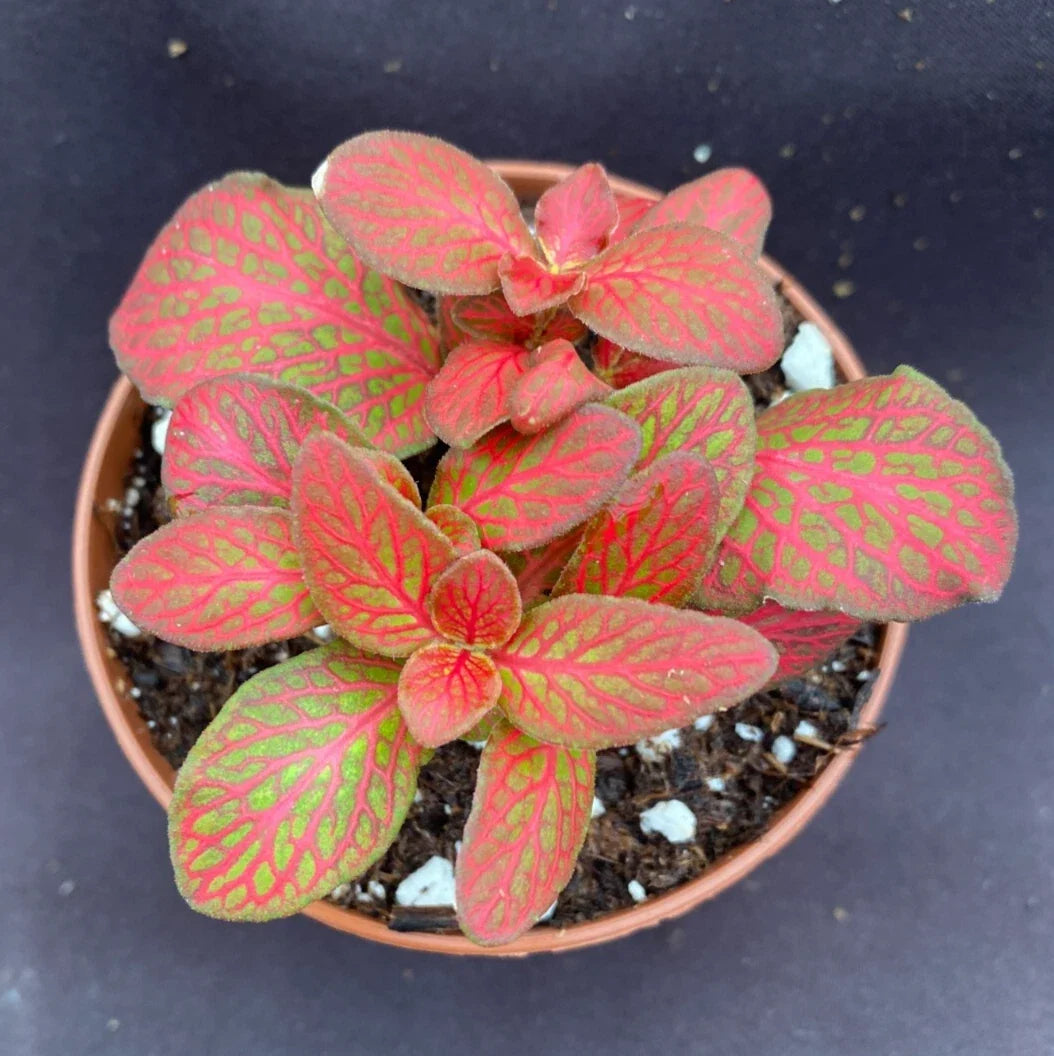
Red Flame Nerve Plant (Fittonia albivenis 'Red Flame')
Red Flame Nerve Plant (Fittonia albivenis 'Red Flame')
Regular price
$46.13 USD
Regular price
$59.96 USD
Sale price
$46.13 USD
Shipping calculated at checkout.
Quantity
Couldn't load pickup availability
The Fiery Understory Carpet & Living Microclimate Gauge
🌿 Overview & Vivarium Benefits
Showcasing brilliant, flame-red veins radiating across rich emerald leaves, the 'Red Flame' Nerve Plant brings bold color and dimensional contrast to bioactive vivarium floors. In line with our commitment to science-backed guidance and purposeful habitat design, this low-growing, spreading tropical perennial forms a dense groundcover layer. It creates secure, shaded shelter for small inhabitants and microfauna while naturally helping to retain vital substrate moisture across the enclosure floor.
📋 Husbandry & Care Specs
- Lighting: Low to moderate, indirect vivarium LED lighting (avoid placing under intense, concentrated light beams to prevent scorching the delicate foliage).
- Humidity Tolerance: 65% – 90%+ (thrives in warm, consistently humid tropical and subtropical vivariums).
- Watering & Drainage: Prefers evenly moist, well-aerated bioactive substrate (such as an ABG-style mix); pair with an established drainage layer to keep roots hydrated without sitting in stagnant water.
- Placement: Foreground to midground groundcover or nestled into lower background planting pockets and moist hardscape crevices.
🦎 Compatibility & Enclosure Synergy
- Best Suited For: Poison Dart Frogs (Dendrobatidae), Mourning Geckos, Micro-Geckos (Sphaerodactylus / Gonatodes), Reed Frogs, Mantellas, and bioactive Clean-Up Crews (Isopods & Springtails).
- Plant Durability: Moderate to delicate. Ideal for lightweight amphibians, micro-geckos, and clean-up crews; heavy-bodied climbing lizards or snakes may crush the creeping foliage.
- Bioactive Function: Shallow root systems stabilize moist topsoil and cycle organic breakdown from animal waste, while the dense leaf canopy maintains a humid microclimate essential for springtail breeding and isopod foraging.
- Safety: 100% Non-toxic and completely safe for bioactive reptiles, amphibians, and invertebrates.