We proudly support USARK because ethical husbandry and keeper advocacy go hand in hand. USARK protects the herpetoculture community and our cold-blooded family members through science-based legislation, education, and proactive defense of responsible animal care.
Live Banded Crickets (Includes 2 Day Shipping)
Live Banded Crickets (Includes 2 Day Shipping)
Regular price
$22.99 USD
Regular price
Sale price
$22.99 USD
Shipping calculated at checkout.
Quantity
Couldn't load pickup availability
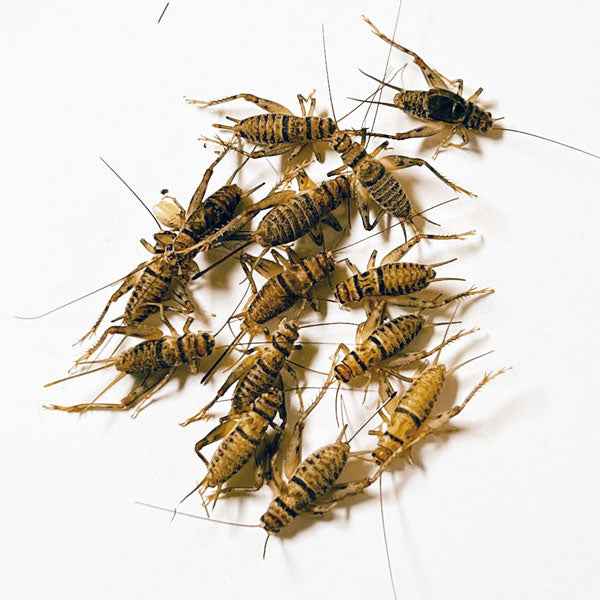
Fuel your insectivorous reptiles, amphibians, and invertebrates with Live Banded Crickets (Gryllodes sigillatus), one of the most reliable and biologically functional staple feeder insects in herpetoculture. Unlike standard brown house crickets, banded crickets are renowned for their exceptional stamina, active movement, and thinner exoskeletons. Their energetic running and hopping stimulate natural predatory hunting behaviors in both active hunters and reluctant feeders, while their high meat-to-chitin ratio ensures optimal nutrient absorption and smooth digestion.
Nutritional & Feeder Benefits
- Superior Digestibility & Softer Chitin: Banded crickets possess a significantly softer, thinner exoskeleton than standard domestic crickets, making them gentle on delicate digestive tracts and minimizing impaction risks for young lizards, micro-geckos, and amphibians.
- Active Hunting Enrichment: Fast, agile, and heat-tolerant, banded crickets stay lively even within warm enclosure basking zones, triggering instinctual tracking, stalking, and striking behaviors essential for captive mental stimulation.
- Exceptional Gut-Load Vehicle: With an efficient digestive tract, banded crickets readily consume nutrient-dense dry diets, gut-loaders, and fresh produce—functioning as living delivery vessels for essential calcium, vitamins, and hydration.
- Hardy & Die-Off Resistant: Far more resilient to shipping stress, temperature variations, and captive environmental shifts than common house crickets (Acheta domesticus), resulting in significantly longer shelf life and fewer colony losses.
- Quieter & Low-Odor Maintenance: Banded crickets produce noticeably softer chirping and substantially less baseline odor when kept in clean, dry, well-ventilated bins.
Feeder Care & Maintenance Guidelines
- Housing & Airflow: Immediately transfer crickets from their shipping container into a smooth-sided keeper, plastic tote, or faunarium equipped with abundant ventilation (such as fine wire mesh lids). Arrange clean egg crates vertically to maximize surface area, prevent overcrowding, and eliminate cannibalism.
- Hydration Management: Keep the cricket enclosure completely dry to prevent lethal humidity spikes, mold, and foul odors. Avoid open water dishes, which harbor bacteria and drown insects; provide moisture exclusively through hydration gel, water crystals, or daily wedges of fresh carrots, squash, and sweet potatoes.
- Gut-Loading & Dusting Protocol: Feed a high-grade commercial cricket chow or clean whole-grain mash 24 to 48 hours prior to offering them to your animals, alongside calcium-rich leafy greens. Lightly dust with species-appropriate calcium and multivitamin powders immediately before feeding.
- Feeder Sizing Golden Rule: Always select feeder crickets that are no larger than the width of the space between your pet’s eyes to prevent choking, regurgitation, or intestinal obstruction.
- Ideal Inhabitants: Bearded dragons, leopard geckos, crested geckos, chameleons, day geckos, poison dart frogs, tree frogs, juvenile monitors, skinks, tarantulas, praying mantises, and insectivorous birds or aquatic species.
Feeder Safety & Bioactive Tip: Avoid leaving large numbers of uneaten crickets roaming in bare or standard enclosures overnight, as unfed crickets can harass or nibble on resting reptiles. In established bioactive vivariums, ensure ample leaf litter, decaying wood, and clean-up crew supplemental foods are present so roaming crickets forage naturally without bothering sleeping animals.