We proudly support USARK because ethical husbandry and keeper advocacy go hand in hand. USARK protects the herpetoculture community and our cold-blooded family members through science-based legislation, education, and proactive defense of responsible animal care.
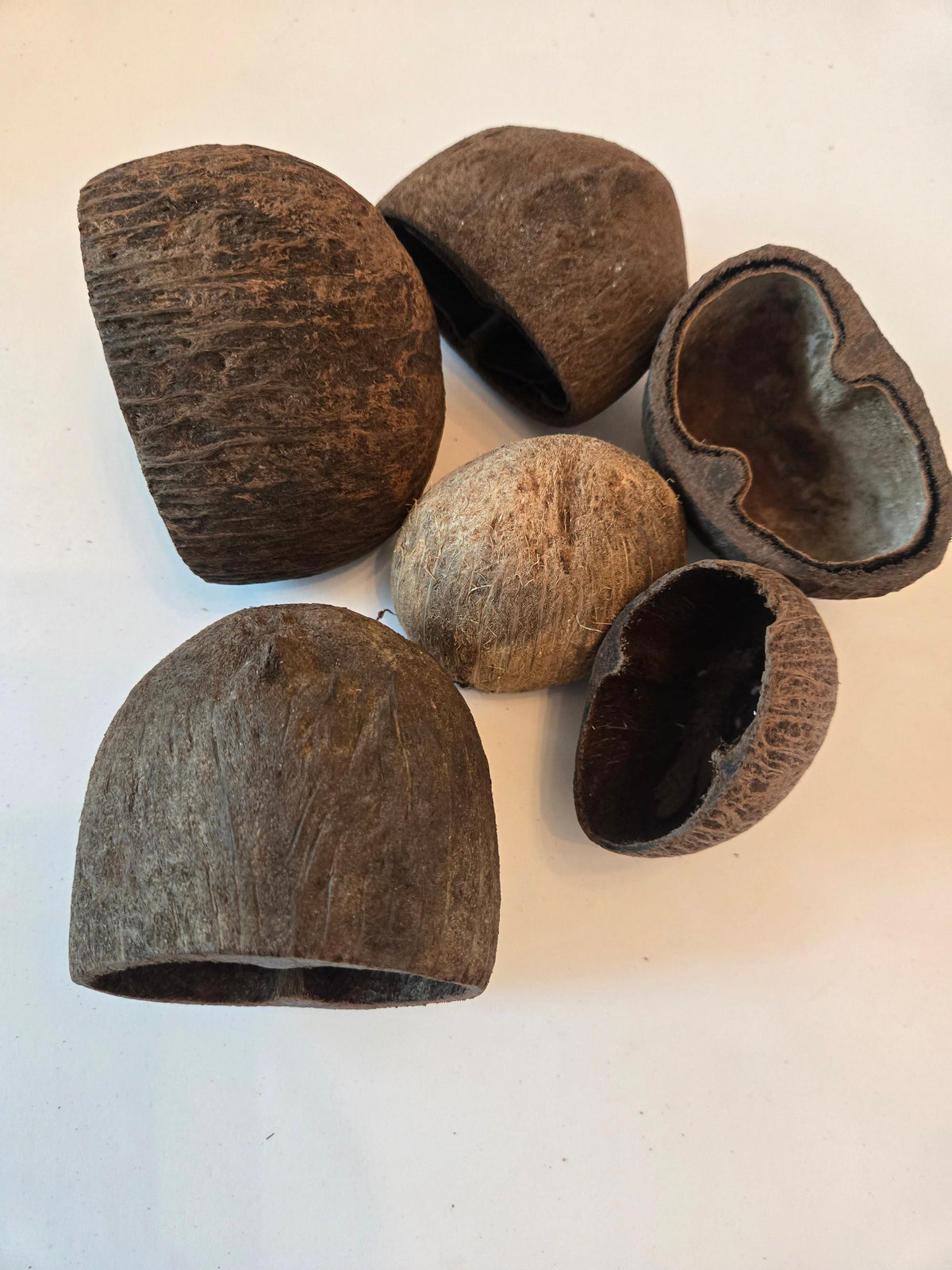
Natural Dried Palm Pods (Borassus flabellifer)
Natural Dried Palm Pods (Borassus flabellifer)
Regular price
$2.75 USD
Regular price
Sale price
$2.75 USD
Shipping calculated at checkout.
Quantity
Couldn't load pickup availability
Introduce rugged woodland contour and functional biological enrichment to your bioactive vivariums and aquascapes. Naturally shed and dried seed capsules of the Borassus flabellifer (Palmyra palm) tree, these unique woody pods feature an organic, cup-like shape resting on a flat, stable base. Their hollow interior and curved walls create immediate, stress-reducing micro-caves for small reptiles, amphibians, and invertebrates. Dense and naturally fibrous, Palm Pods resist rapid decay in humid environments—providing an enduring shelter while steadily feeding living clean-up crews and cycling organic matter into your ecosystem.
Setup & Preparation Guide
- Aquarium Boiling Protocol: Boil pods in clean freshwater for at least 15 minutes to break surface buoyancy, help them sink to the substrate, and release concentrated initial tannins.
- Conditioning & Soaking: After boiling, transfer pods to a clean container of freshwater to soak overnight or for several days (changing water daily) until completely waterlogged and your desired water tint is achieved.
- Terrarium & Vivarium Prep: For terrestrial bioactive setups, give pods a brief 5–10 minute boil or hot-water soak followed by complete air drying to eliminate transit dust and prime the fibrous exterior for microfauna colonization.
- Micro-Cave Placement: Place the pod flat-side down directly onto damp substrate or nestle it beneath leaf litter to create a dark, ground-level cave retreat for dart frogs, micro-geckos, and terrestrial invertebrates.
- Aquatic Tint Management: Palm pods release a natural amber tint into the water; if crystal-clear water is preferred in a community aquarium, run chemical filtration (such as activated carbon or Purigen) to absorb color while preserving beneficial water-conditioning humic substances.
Bioactive & Ecological Benefits
- Microfauna Colonization & Food Source: The thick, fibrous exterior provides a humid microclimate and slow-decaying cellulose food source that isopods, springtails, and beneficial microbes readily colonize.
- Secure Cryptic Micro-Shelter: The hollow, curved cavity offers a secure, ground-level hiding spot where poison dart frogs, spiderlings, micro-lizards, and molting invertebrates feel instinctively protected.
- Prolific Aquatic Biofilm Grazing: Submerged in freshwater aquariums or shrimp setups, the textured ridges quickly cultivate a layer of nutrient-rich microbial biofilm—creating an all-day natural grazing surface for freshwater shrimp, snails, and fry.
- Living Substrate Enrichment: As the dense capsule gradually breaks down over many months, it deposits rich organic matter into the vivarium soil, improving aeration and moisture retention.
- 100% Organically Sourced & Clean: Organically harvested in India and sun-dried without chemical bleaches, artificial dyes, or agricultural pesticides—completely safe for sensitive amphibians and living clean-up crews.
Specifications & Sizing Details
| Specification | Details |
| Botanical Species | Borassus flabellifer (Palmyra Palm) |
| Average Height | Approx. 1.5" – 2.5" (3.8 – 6.4 cm) (resting on flat opening) |
| Average Length | Approx. 2.0" – 4.0" (5.1 – 10.2 cm) |
| Average Width | Approx. 1.5" – 3.0" (3.8 – 7.6 cm) |
| Source Origin | India |
| Habitat Suitability | Bioactive terrariums, dart frog vivariums, shrimp tanks, blackwater biotope aquariums, and invertebrate setups |
| Alternative Uses | Textured bowl accents, dry botanical centerpieces, fairy gardens, and mixed-media crafts |
- Authentic Botanical Variance: Because each pod is an untreated, wild-grown botanical, natural variations in shape, opening contour, wall thickness, and earthy wood tones are normal.
- Safety Notice: Intended strictly for vivarium, terrarium, aquarium, and decorative craft applications. Not for human or livestock consumption.