We proudly support USARK because ethical husbandry and keeper advocacy go hand in hand. USARK protects the herpetoculture community and our cold-blooded family members through science-based legislation, education, and proactive defense of responsible animal care.
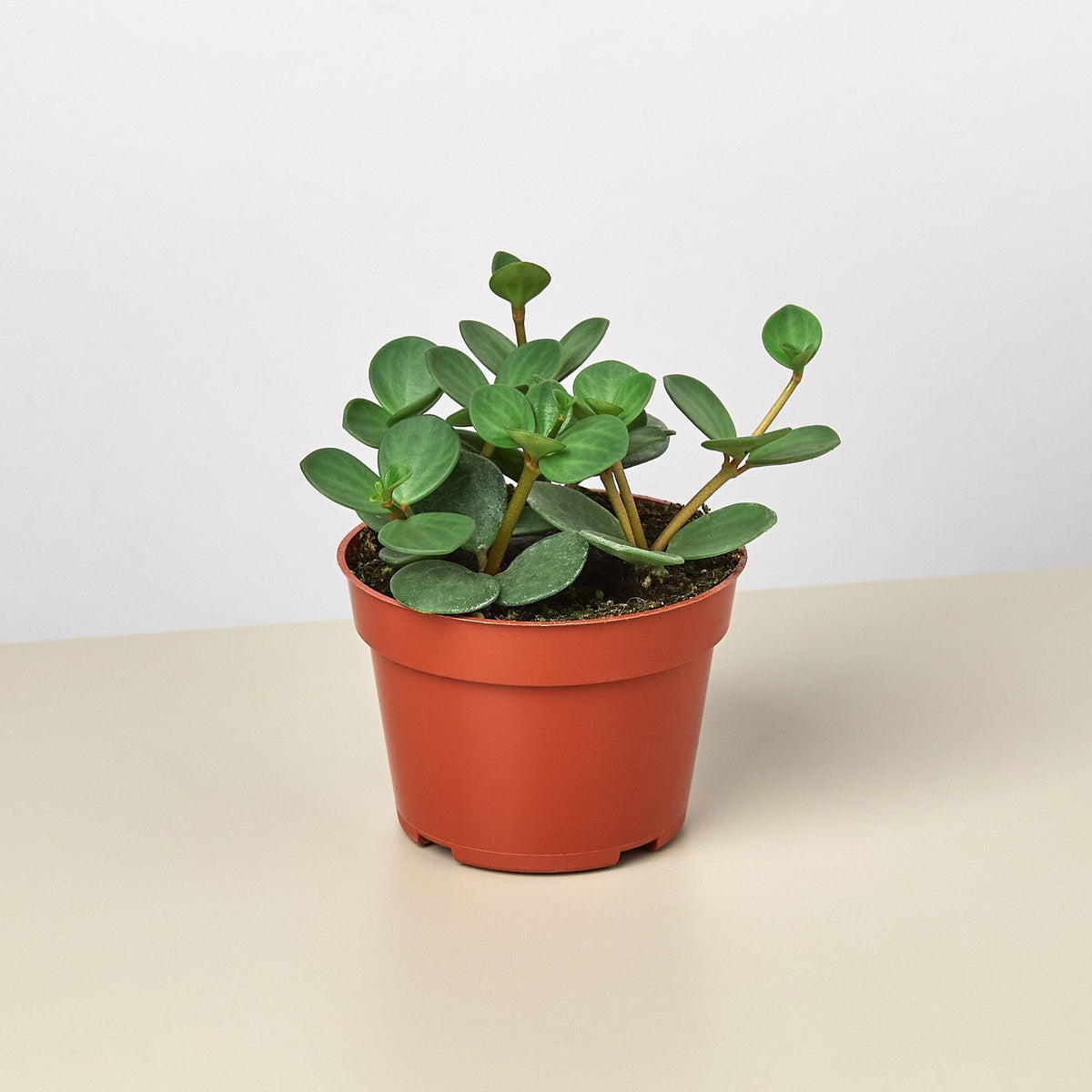
Hope Peperomia (Peperomia 'Hope' / Peperomia tetraphylla 'Hope')
Hope Peperomia (Peperomia 'Hope' / Peperomia tetraphylla 'Hope')
Regular price
$14.99 USD
Regular price
Sale price
$14.99 USD
Shipping calculated at checkout.
Quantity
Couldn't load pickup availability
Bioactive & Terrarium Safe | Coin-Shaped Succulent Whorls, Trailing Canopy Vines & 100% Non-Toxic Epiphytic Shelter
Introduce succulent cascading foliage, tactile button-like leaves, and elevated microclimate shelter into your naturalistic enclosure with the Hope Peperomia (Peperomia 'Hope'). Combining the trailing, epiphytic growth habit of its wild South American parent species, this trailing perennial produces clusters of thick, fleshy, coin-shaped leaves arranged in neat whorls of three to four along creeping, semi-succulent stems. In bioactive vivariums, Peperomia 'Hope' excels as a cascading canopy accent or vertical hardscape climber—spilling over cork bark ledges, mounting into elevated branch hollows, or rooting along background panels. Completely non-toxic and free of chemical irritants, 'Hope' delivers a durable, pet-safe botanical feature that pairs high-humidity tropical tolerance with semi-succulent resilience.
Bioactive & Vivarium Benefits
- Button-Whorl Foliar Architecture: Plump, coin-shaped emerald leaves grow in regular whorled clusters, providing rich geometric texture and visual contrast against dark cork bark, driftwood, and broad-leaf understory plants.
- Semi-Succulent Weight-Bearing Stems: Thick, leathery leaves and flexible, rubbery stems comfortably bear the weight, climbing claws, and perching traffic of arboreal geckos, anoles, and tree frogs without tearing or snapping.
- Internal Moisture Reserves & Heat Resilience: Fleshy internal foliar tissue stores clean hydration, allowing the vine to tolerate warm basking gradients, strong enclosure ventilation, and brief dry intervals between misting cycles.
- Trailing & Epiphytic Canopy Scaffolding: Readily trails downward or climbs across textured backgrounds, weaving living aerial runways and suspended canopy hideaways that break up open sightlines and reduce territorial stress.
- Foliar Mist Hydration Stations: The smooth, rounded upper surfaces of the leaves intercept and pool fine water droplets during scheduled misting cycles, creating elevated drinking stations for canopy dwellers that avoid floor water dishes.
- 100% Non-Toxic & Pet-Safe Tissue: Naturally free of insoluble calcium oxalates, chemical latex, and toxic alkaloids, making it completely harmless to sensitive amphibian skin and safe if sampled by curious omnivorous or herbivorous reptiles.
- Bioactive Epiphytic Root Anchoring: Develops fine, non-invasive aerial and adventitious roots that anchor into damp sphagnum moss or cork bark crevices, taking up dissolved nitrates and mist runoff while coexisting cleanly with bioactive cleanup crews.
Habitat & Care Specifications
- Light Requirements: Moderate to bright indirect vivarium LED lighting. Thrives under full-spectrum diffused light, which keeps internodes tight and leaf whorls densely spaced; shield foliage from direct, concentrated basking hotspots and ceramic heat emitters to prevent scorching.
- Humidity & Moisture Dynamics: 50% – 80%+; highly adaptable across moderate to high humidity. Appreciates regular vivarium misting, but requires adequate enclosure ventilation so the root zone and trailing stems dry slightly between waterings.
- Substrate & Rooting Medium: Epiphytic or semi-epiphytic. Mount directly into cork pockets packed with long-fiber sphagnum moss, or plant into an airy, highly porous tropical bioactive mix (such as ABG mix blended with extra orchid bark, pumice, and charcoal) over a functional false bottom. Avoid dense, heavy, or waterlogged soils.
- Enclosure Placement: Upper to midground background planter pockets, wedged into driftwood branch forks, or allowed to trail gracefully from elevated cork bark ledges down into the mid-strata.
- Growth Rate & Maintenance: Moderate grower. Easily pruned or propagated by snipping trailing stems just below a leaf node using sterilized shears; stem cuttings callous quickly and root readily when tucked into moist sphagnum or damp bioactive substrate.
- Ideal Inhabitants: Crested geckos (Correlophus ciliatus), gargoyle geckos, day geckos (Phelsuma spp.), mourning geckos, White’s tree frogs, red-eyed tree frogs, emerald tree skinks, and bioactive cleanup crews.
Bioactive Prep & Safety Tip: Before introducing any live plant into an active bioactive habitat, carefully wash commercial greenhouse potting soil down to bare roots using clean, dechlorinated water to remove potential synthetic fertilizers or pest residues. Because Peperomia 'Hope' is completely non-toxic and lacks insoluble calcium oxalate crystals or caustic sap, this plant provides safe, structurally resilient living cover across both arboreal reptile and amphibian vivariums, upholding Rachel's Reptile Resource's foundational commitment to animal welfare, husbandry excellence, and science-backed guidance.