We proudly support USARK because ethical husbandry and keeper advocacy go hand in hand. USARK protects the herpetoculture community and our cold-blooded family members through science-based legislation, education, and proactive defense of responsible animal care.
Peperomia Watermelon
Peperomia Watermelon
Regular price
$28.00 USD
Regular price
Sale price
$28.00 USD
Shipping calculated at checkout.
Quantity
Couldn't load pickup availability
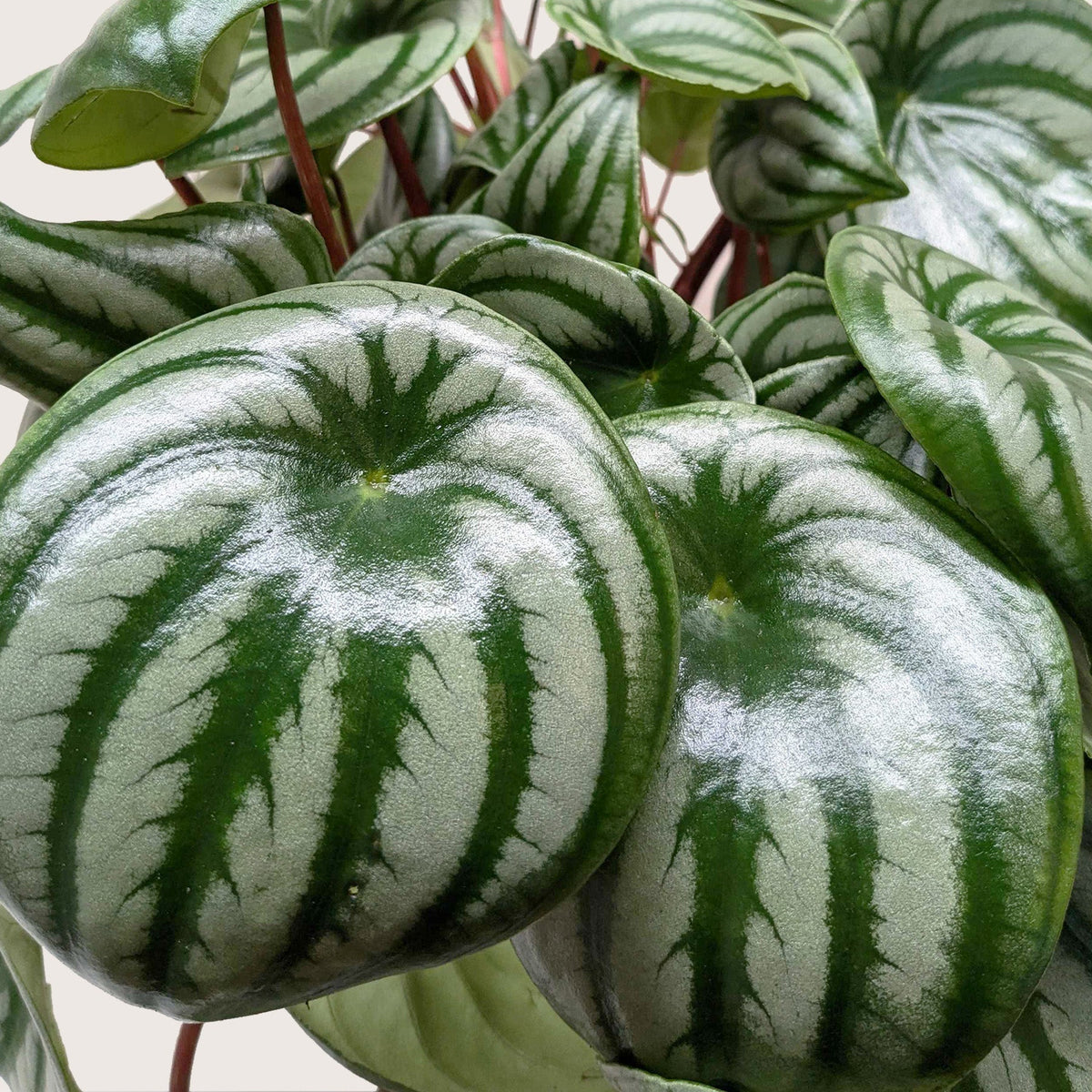
One of the most beloved and instantly recognizable compact plants in the world — the Peperomia Watermelon is named for the unmistakable resemblance of its thick, round leaves to the rind of a watermelon, with alternating bands of silver and dark green on rosy-red stems. It’s a plant that makes people smile the moment they see it — the whimsical pattern combined with the compact, rounded form is simply irresistible. Easy to care for, drought tolerant, pet-safe, and genuinely one of the most charming small plants available anywhere.
Explore more beloved compact plants in our houseplant collection or browse our pet-friendly plants.
🌿 Why Peperomia Watermelon is Universally Adored
- Iconic Watermelon-Stripe Pattern — Alternating silver and dark green bands on round leaves make this one of the most recognizable plants in the world.
- Rosy-Red Stems — The contrast of pink-red stems against the striped green leaves adds another layer of color and charm.
- Extremely Easy to Grow — Thick succulent-like leaves store water; very tolerant of irregular watering.
- Pet-Friendly — Non-toxic to cats and dogs. 🐾
- Perfect Gift Plant — The fun, whimsical appearance makes it one of the best plant gifts for any occasion.
🌱 Plant Profile
- Botanical Name: Peperomia argyreia
- Common Names: Watermelon Peperomia, Watermelon Begonia
- Origin: South America
- Mature Size: 6–12" tall; compact rosette
- Foliage: Round, thick; alternating silver and dark green stripes on rosy-red stems
☀️ Care at a Glance
- Light: Bright to medium indirect light. Avoid direct sun which can bleach the silver stripes.
- Water: Allow soil to dry between waterings. Very drought tolerant — less is always more.
- Humidity: Adapts to average household humidity.
- Temperature: 65–85°F. Sensitive to temperatures below 55°F.
- Fertilizer: Feed lightly 2–3 times per year during the growing season.
🌿 Pro Tip: Water Watermelon Peperomia from the base (bottom watering) when possible — it keeps water off the leaves, prevents rot at the crown, and encourages deeper root growth for a healthier, more resilient plant.