We proudly support USARK because ethical husbandry and keeper advocacy go hand in hand. USARK protects the herpetoculture community and our cold-blooded family members through science-based legislation, education, and proactive defense of responsible animal care.
Watermelon Peperomia (Peperomia argyreia)
Watermelon Peperomia (Peperomia argyreia)
Regular price
$24.99 USD
Regular price
Sale price
$24.99 USD
Shipping calculated at checkout.
Quantity
Couldn't load pickup availability
Bioactive-Safe | Striped Broadleaf Canopy & Non-Toxic Terrarium Shelter
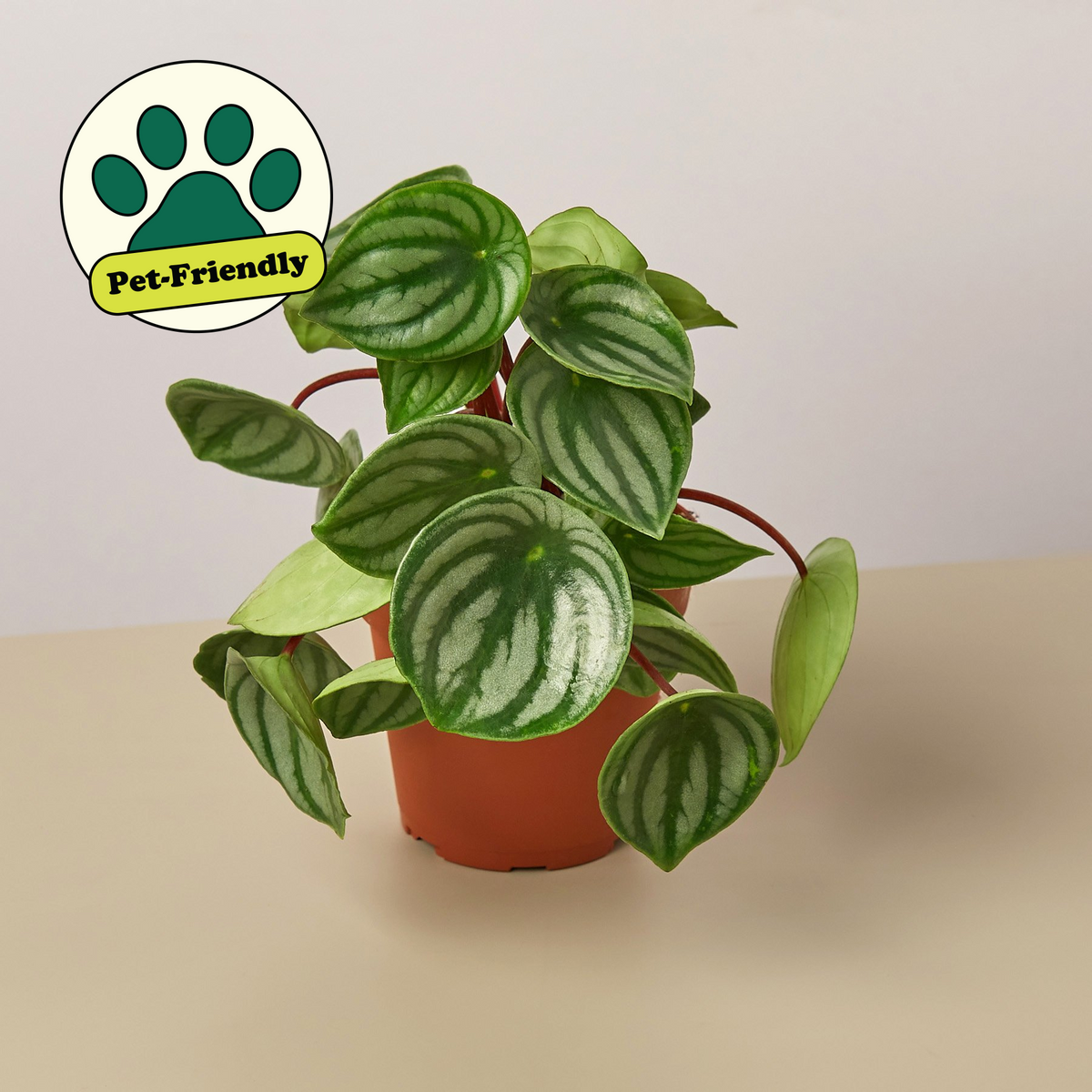
Scale up the botanical contrast and lush understory realism of your bioactive environment with the iconic foliage of Watermelon Peperomia (Peperomia argyreia, historically nicknamed the Watermelon Begonia). Native to the tropical rainforest floors of northern South America—including Brazil, Bolivia, Ecuador, and Venezuela—this clumping understory perennial reaches approximately 20 cm (8 inches) in height. It features rounded, slightly fleshy oval leaves strikingly patterned with radiating, curved silver stripes against deep green bands, held aloft by contrasting crimson-red stems. Its distinctive watermelon-rind foliage brings vibrant color, geometric depth, and authentic rainforest understory aesthetics directly into naturalistic vivariums, terrarium foregrounds, and converted Zen Habitats.
Its compact, mounding growth habit provides valuable micro-structural utility across lower and mid-canopy zones. The firm, succulent petioles support broad, weight-bearing leaves that function as natural resting pads, low-profile perches, and elevated runways, while the dense umbrella-like dome of foliage creates essential sightline breaks, territorial boundaries, and sheltered microclimates tailored for poison dart frogs, micro-geckos, and juvenile arboreal lizards.
Why It Belongs in Your Habitat:
- 100% Spineless & Pet-Safe Foliage: Completely non-toxic and naturally devoid of calcium oxalate crystals, caustic latex, or irritating chemical saps. The smooth, peltate leaves contain zero spines or abrasive textures, posing zero risk of mechanical injury or chemical irritation to delicate amphibian skin and reptile scales.
- Broadleaf Weight-Bearing Perches & Pathways: Sturdy crimson petioles hold firm, fleshy leaves capable of supporting the weight of small-to-medium herptiles, serving as elevated stepping platforms, basking pads, and ground-level transit routes.
- Foliar Mist Hydration Stations: Broad, slightly cupped leaf surfaces naturally catch and pool fine mist droplets during scheduled spray cycles, providing accessible elevated drinking reservoirs for species that avoid standing water dishes.
- Living Sightline Breaks & Microclimates: The dense, dome-shaped canopy diffuses direct overhead vivarium LED lighting, breaking lines of sight to reduce stress while trapping ambient moisture at the substrate boundary to create cool, stable microclimates.
- Bioactive Nutrient Cycling: Establishes a compact, fibrous root system that actively draws up excess moisture and dissolved nitrates from bioactive substrate beds, assisting cleanup crews in long-term terrarium hygiene.
- Husbandry-First Assurance: Vetted in alignment with Rachel's Reptile Resource's standards for animal welfare, husbandry excellence, and science-backed guidance.
Habitat & Care Specifications:
- Light Requirements: Moderate to bright indirect vivarium LED lighting. Strong full-spectrum illumination maintains vibrant silver banding and rich red stem coloration without leaf scorch; keep foliage safely distanced from concentrated basking spots and ceramic heat emitters to prevent foliar burn.
- Humidity & Moisture Dynamics: 60% – 85%+; thrives in moderate to high vivarium humidity. Mist regularly with reverse osmosis (RO), distilled, or clean dechlorinated water, ensuring adequate ambient air circulation to prevent standing water accumulation on the leaf crowns.
- Substrate & Rooting Medium: Requires an airy, well-draining tropical bioactive blend (such as an ABG mix containing coconut coir, sphagnum moss, orchid bark, and horticultural charcoal) over a functional false bottom drainage layer; avoid heavy, waterlogged soils.
- Enclosure Placement: Foreground to midground focal mound, base-of-hardscape anchor, or nestled into terrarium floor pockets in tropical vivariums and converted Zen Habitats.
- Growth Rate & Maintenance: Compact, moderate grower reaching up to 20 cm (8 inches) in height. Use sterilized vivarium shears to snip away spent, slender green summer flower spikes or aging outer petioles at the crown base to encourage fresh growth and air circulation.
- Ideal Inhabitants: Poison dart frogs (Dendrobates, Ranitomeya), mourning geckos (Lepidodactylus lugubris), yellow-headed day geckos (Phelsuma klemmeri), reed frogs, juvenile crested geckos (Correlophus ciliatus), jumping spiders, and bioactive cleanup crews (springtails and isopods).
Bioactive Prep & Safety Tip:
Before introducing Peperomia argyreia into an active bioactive habitat, carefully wash commercial greenhouse potting soil down to bare roots using clean, dechlorinated water to remove potential synthetic fertilizers or pest residues. When planting into moist ABG substrate, gently anchor the root system while keeping the central crown slightly elevated above saturated substrate to prevent petiole rot. Because Peperomia argyreia is completely non-toxic and lacks hazardous spines or calcium oxalate crystals, this plant provides safe, structurally resilient living cover across both amphibian and reptile vivariums, upholding Rachel's Reptile Resource's foundational commitment to animal welfare, husbandry excellence, and science-backed guidance.