We proudly support USARK because ethical husbandry and keeper advocacy go hand in hand. USARK protects the herpetoculture community and our cold-blooded family members through science-based legislation, education, and proactive defense of responsible animal care.
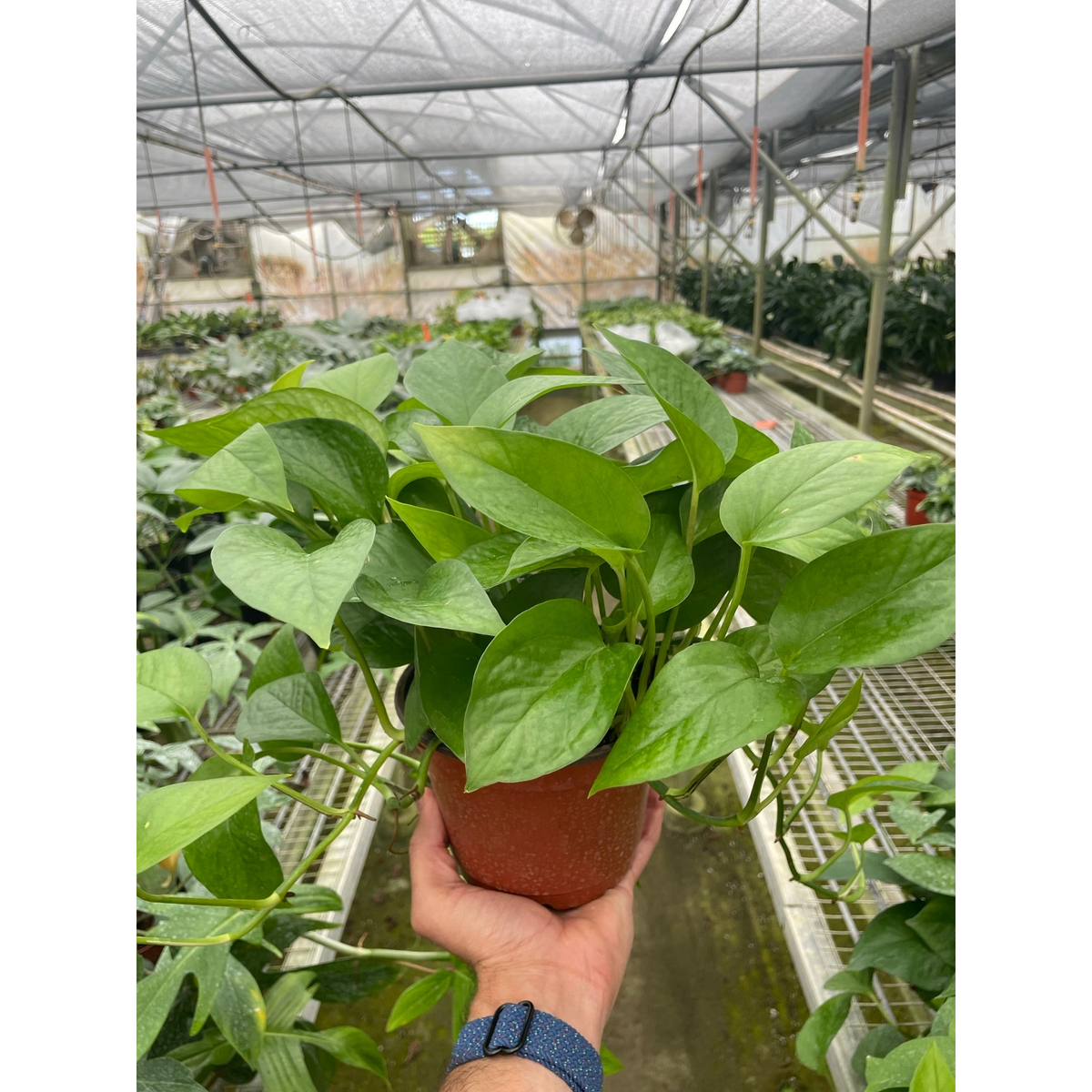
Green Queen Pothos (Epipremnum aureum 'Green Queen')
Green Queen Pothos (Epipremnum aureum 'Green Queen')
Regular price
$21.99 USD
Regular price
Sale price
$21.99 USD
Shipping calculated at checkout.
Quantity
Couldn't load pickup availability
Establish a resilient, living vertical landscape within your terrarium with the Green Queen Pothos (Epipremnum aureum 'Green Queen', widely known as Devil's Ivy). Celebrated in horticulture as one of the hardiest, most adaptable indoor plants in the world, this classic solid-green cultivar trades heavy variegation for deep emerald foliage optimized for low-to-moderate light conditions. Featuring a vigorous vining habit, Green Queen can be left to cascade from upper background planters or trained upward across cork branches and textured 3D backgrounds. Its tough, fibrous vines and broad, waxy leaves provide vital arboreal perches, natural shade, and humidity micro-climates for tree frogs, geckos, and climbing invertebrates.
Bioactive & Vivarium Benefits
- Lush Solid-Green Canopy: Rich, deep-emerald foliage thrives even in heavily shaded lower-canopy zones where variegated cultivars often struggle or lose their color, providing an enduring blanket of vibrant living greenery.
- Heavy-Duty Climbing Durability: Features thick, flexible stems and leathery leaves capable of withstanding the weight, foot traffic, and sharp claws of active arboreal lizards (such as crested geckos and gargoyle geckos) without snapping or bruising.
- Canopy Micro-Habitats & Secure Day Hides: Dense, overlapping foliage creates shaded daytime resting zones and localized humidity retreats that reduce environmental stress for nocturnal, crepuscular, and canopy-dwelling species.
- Natural Foliar Hydration Catchment: Broad, smooth leaf surfaces intercept fine water droplets during scheduled misting cycles, forming clean elevated drinking beads for arboreal species that refuse standing floor bowls.
- Bioactive Waste Cycling & Living Root Filtration: Establishes an extensive root system throughout bioactive substrates to absorb dissolved animal waste, excess nitrates, and urates, partnering with cleanup crew microfauna (isopods and springtails) to keep living soil balanced.
- Dual Growth Adaptability: Functions effortlessly as a cascading trailing vine from high canopy ledges or an aggressive vertical climber when aerial roots are given rough cork bark or background backgrounds to grip.
Habitat & Care Specifications
- Light Requirements: Low to bright indirect vivarium LED lighting. Thrives across a wide range of light levels; position foliage safely away from concentrated heat directly beneath unshaded basking lamps or ceramic heat emitters.
- Humidity & Moisture Dynamics: 50% – 90%+; highly adaptable across subtropical and tropical humidity gradients. Handles routine misting sessions with ease; ensure moderate terrarium ventilation so leaf surfaces dry between mistings.
- Substrate & Rooting Medium: Requires an aerated, well-draining tropical bioactive mix (such as an ABG blend rich in orchid bark, coco fiber, tree fern fiber, and charcoal) set over a functional false bottom drainage layer. Roots prefer light, consistent moisture but will rot in stagnant, waterlogged mud.
- Enclosure Placement: Background planter cups, upper canopy ledges, or substrate floor planting to train upward along branches and vertical backgrounds.
- Growth Rate & Pruning: Fast, vigorous grower once rooted; easily guided across branches with natural twine or trimmed back with clean shears to direct growth and propagate into fresh stem cuttings.
- Ideal Inhabitants: Crested geckos, gargoyle geckos, giant day geckos (Phelsuma spp.), White’s tree frogs, red-eyed tree frogs, dart frogs (Dendrobates spp.), mourning geckos, emerald tree skinks, green anoles, and arboreal tarantulas.
Bioactive Prep & Safety Tip: Before planting in an active bioactive habitat, gently wash away all commercial greenhouse nursery soil from the root ball down to bare roots using clean, dechlorinated water to remove potential synthetic fertilizers or chemical residues. Like all members of the Araceae family, Epipremnum produces microscopic insoluble calcium oxalate crystals within its foliar tissues. While entirely safe and inert for insectivores, carnivores, and amphibians that use the plant strictly for perching and cover, it should not be planted in habitats housing herbivorous or omnivorous reptiles (such as bearded dragons, uromastyx, or tortoises) that actively graze on habitat greenery, in keeping with science-backed standards for safe animal husbandry.