We proudly support USARK because ethical husbandry and keeper advocacy go hand in hand. USARK protects the herpetoculture community and our cold-blooded family members through science-based legislation, education, and proactive defense of responsible animal care.
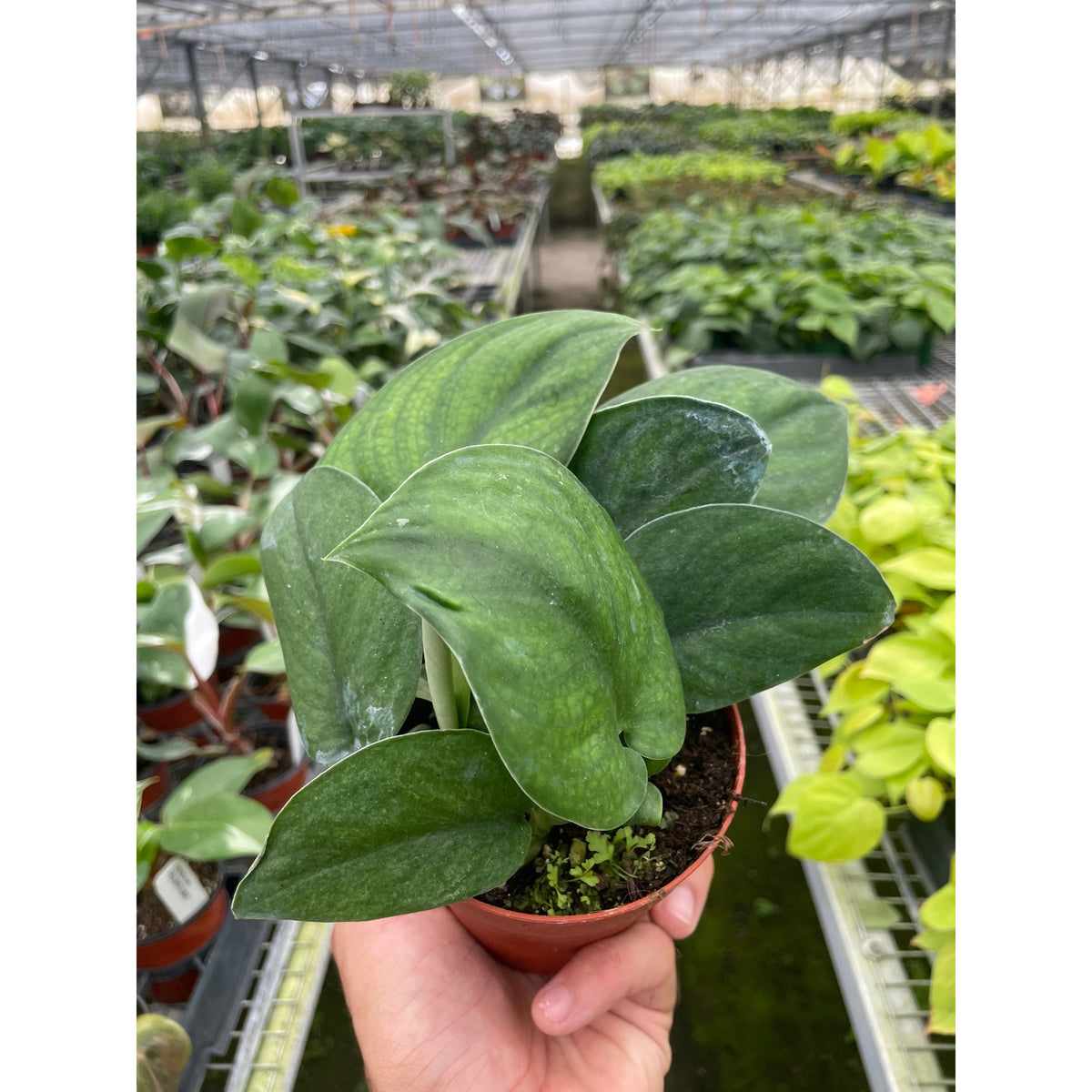
Jade Satin Pothos (Scindapsus pictus 'Jade Satin')
Jade Satin Pothos (Scindapsus pictus 'Jade Satin')
Regular price
$32.99 USD
Regular price
Sale price
$32.99 USD
Shipping calculated at checkout.
Quantity
Couldn't load pickup availability
Bring rich forest depth, living canopy architecture, and dependable structural durability to your enclosure with Jade Satin Pothos (Scindapsus pictus 'Jade Satin'). While closely related to silver-splashed cultivars like 'Exotica' and 'Argyreus', Jade Satin is prized among botanical collectors and bioactive hobbyists for its solid, deep emerald-green coloration and thick, velvety, heart-shaped leaves. Lacking the white or silver variegation that often demands higher light levels, this hardy aroid thrives across lower to moderate vivarium lighting. Its sturdy, rubbery stems and tear-resistant leaves create heavy-duty climbing routes, shaded daytime retreats, and natural foliar hydration platforms for arboreal reptiles and amphibians.
Bioactive & Vivarium Benefits
- Velvety, Deep Jade Foliage: Produces large, asymmetrical heart-shaped leaves in an intense, uniform forest green, providing rich contrast against lighter vivarium accents and maintaining its deep color even in shaded understory areas.
- Superior Foliar Thickness & Weight-Bearing Strength: The leaves of Scindapsus pictus are noticeably thicker, firmer, and more rubbery than common Epipremnum varieties. This enhanced physical durability allows the vine to easily support the weight and claws of active, heavier arboreal lizards (such as adult crested geckos and gargoyle geckos) without creasing, tearing, or snapping.
- Canopy Micro-Habitats & Shaded Day Hides: The broad, curved leaves act as natural overhead umbrellas, forming localized humidity pockets and cool, shaded day perches that lower stress for crepuscular and nocturnal species.
- Natural Foliar Hydration Catchment: Smooth, broad leaf surfaces readily intercept and cradle water beads during automated or hand-misting routines, creating elevated, natural drinking stations for canopy dwellers that ignore floor water dishes.
- Controlled, Non-Invasive Vining: Grows at a steady, manageable pace rather than rapidly overtaking the enclosure canopy, allowing keepers to shape growth across hardscape without having to constantly hack back aggressive runners.
- Bioactive Waste Cycling: Establishes an extensive root network that anchors into living substrate to take up dissolved nitrates, urates, and decaying organic matter, partnering with bioactive clean-up crews (isopods and springtails) to stabilize soil hygiene.
Habitat & Care Specifications
- Light Requirements: Low to bright indirect vivarium LED lighting. Thrives in moderate indirect light and tolerates lower-canopy shade exceptionally well; position foliage safely away from thermal hotspots directly below unshaded basking lamps or ceramic heat emitters.
- Humidity & Moisture Dynamics: 60% – 90%+; highly adaptable across subtropical and tropical humidity gradients. Handles routine daily misting well; ensure adequate terrarium air exchange so standing water on leaf surfaces evaporates within a few hours.
- Substrate & Rooting Medium: Requires an airy, well-draining bioactive soil mix (such as an ABG blend with orchid bark, tree fern fiber, charcoal, and coco coir) positioned over a functional false bottom drainage layer. Roots prefer light, consistent moisture but will rot in waterlogged, anaerobic mud.
- Enclosure Placement: Background planter cups, midground branch junctions, or planted at the vivarium floor to climb upward along textured background panels, cork bark, and driftwood.
- Growth Rate & Pruning: Moderate grower; easily guided along branches with natural twine or trimmed with clean shears to direct vine direction and propagate new cuttings.
- Ideal Inhabitants: Crested geckos, gargoyle geckos, giant day geckos (Phelsuma spp.), White’s tree frogs, red-eyed tree frogs, dart frogs (Dendrobates spp.), mourning geckos, emerald tree skinks, green anoles, and arboreal tarantulas.
Bioactive Prep & Safety Tip: Before planting in an established vivarium, gently rinse all nursery potting soil from the root ball down to bare roots using clean, dechlorinated water to remove commercial greenhouse fertilizers and systemic pest treatments. Like all members of the Araceae family, Scindapsus contains microscopic insoluble calcium oxalate crystals within its foliar tissues. While completely safe and biologically inert for insectivores, carnivores, and amphibians that use the plant strictly for climbing and cover, it should not be planted in habitats housing herbivorous or omnivorous reptiles (such as bearded dragons, uromastyx, or tortoises) that actively graze on habitat greenery, in keeping with science-backed standards for safe animal husbandry.