We proudly support USARK because ethical husbandry and keeper advocacy go hand in hand. USARK protects the herpetoculture community and our cold-blooded family members through science-based legislation, education, and proactive defense of responsible animal care.
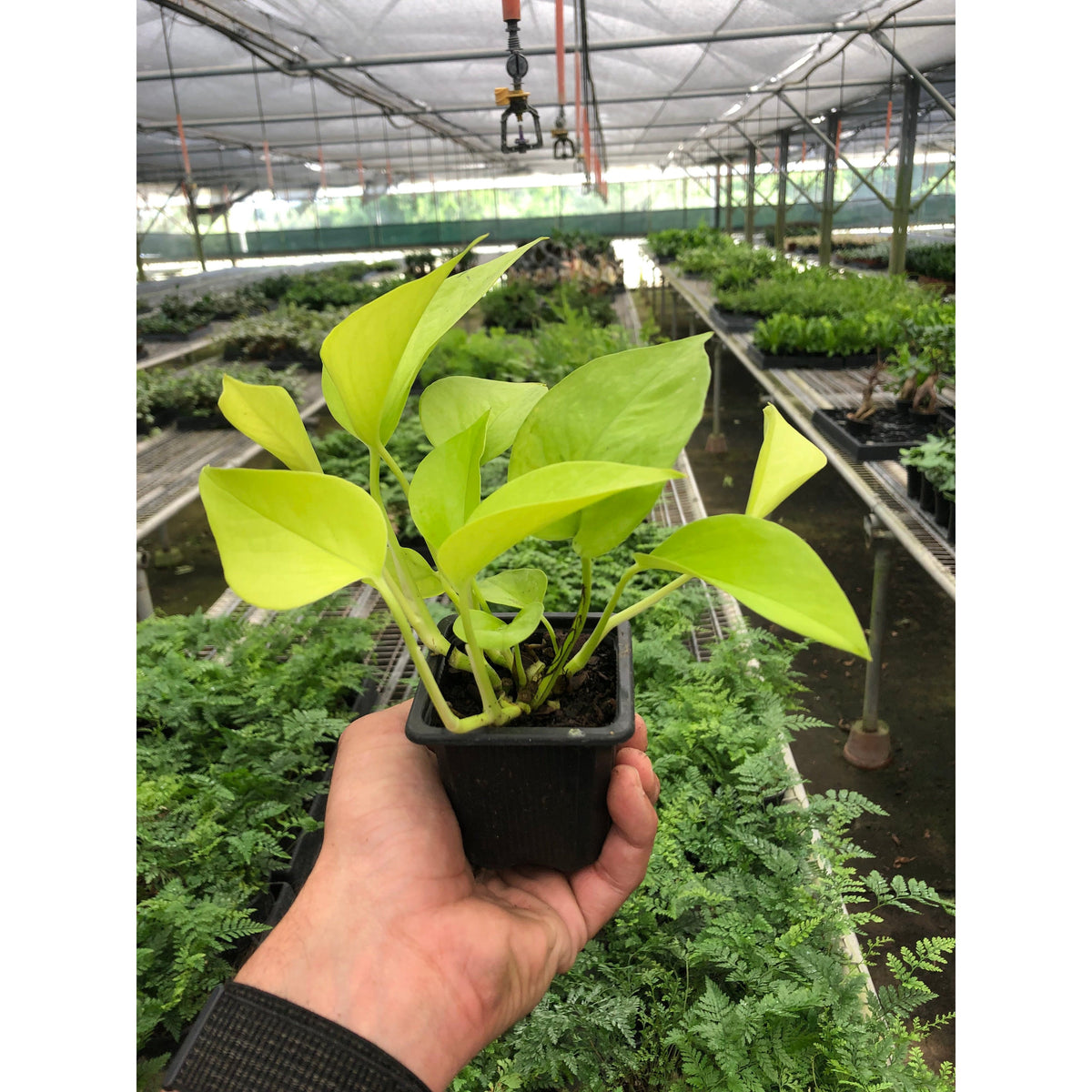
Neon Pothos (Epipremnum aureum / Epipremnum pinnatum 'Neon')
Neon Pothos (Epipremnum aureum / Epipremnum pinnatum 'Neon')
Regular price
$23.99 USD
Regular price
Sale price
$23.99 USD
Shipping calculated at checkout.
Quantity
Couldn't load pickup availability
Brighten shaded vivarium canopies and establish lush, living vertical pathways with Neon Pothos (Epipremnum 'Neon'). Celebrated for its electrifying, glowing lime-to-chartreuse foliage, this vibrant cultivar pairs the legendary resilience and rapid growth of classic pothos with an intense burst of high-visibility color. Whether trained to climb vertical cork rounds, allowed to cascade down from elevated background planter cups, or rooted along the vivarium floor to create ground-level groundcover, Neon Pothos creates dense natural shelter, elevated basking perches, and vital canopy micro-climates for arboreal reptiles and amphibians.
Bioactive & Vivarium Benefits
- High-Visibility Electric Coloration: Produces luminous, heart-shaped leaves in shades of glowing lime and vivid neon-green, delivering striking visual contrast against dark backgrounds, cork bark, and deep forest-green tropical foliage.
- Canopy Micro-Habitats & Structural Shelter: Rapidly establishes an interlocking canopy of broad leaves that shield lower terrarium zones from harsh lighting, providing secure day hides, resting hammocks, and sleeping sites for arboreal geckos and tree frogs.
- Heavy-Duty Climbing Durability: Unlike delicate ferns or tender ground creepers, the thick, fibrous stems and hearty foliage of pothos easily bear the weight and repeated traffic of active juvenile and adult lizards without snapping.
- Natural Foliar Hydration Catchment: Smooth, broad leaf surfaces readily intercept and hold fine water beads during automated or manual misting cycles, creating clean, elevated drinking stations for species that refuse ground-level water dishes.
- Bioactive Waste Absorption & Root Filtration: Develops an extensive, aggressive root system throughout bioactive substrates that uptakes dissolved nitrates, urates, and organic waste, partnering with cleanup crew microfauna (isopods and springtails) to keep the living soil healthy and balanced.
- Dual Growth Architecture: Adapts effortlessly as a cascading hanging trailer from upper habitat ledges or as an anchoring vertical climber when allowed to grip textured background walls, branch forks, or moss poles via aerial roots.
Habitat & Care Specifications
- Light Requirements: Moderate to bright indirect vivarium LED lighting. (Bright, full-spectrum light preserves the intense neon-chartreuse coloration; in very low light, new growth may revert to darker olive tones. Position foliage safely away from concentrated heat directly under unshaded basking lamps).
- Humidity & Moisture Dynamics: 50% – 90%+; highly adaptable across subtropical and tropical humidity gradients. Tolerates daily misting cycles well; ensure good air exchange to allow leaf surfaces to dry between mistings.
- Substrate & Rooting Medium: Requires a well-draining bioactive soil mix (such as an ABG blend rich in orchid bark, coco fiber, tree fern fiber, and charcoal) positioned above a functional false bottom drainage layer. Roots prefer consistent light moisture but will decline in stagnant, waterlogged mud.
- Enclosure Placement: Background, upper-canopy planters, or midground anchor points. Excellent for tall arboreal enclosures where trailing vines can cascade across vertical branches.
- Growth Rate & Pruning: Fast grower once rooted; easily trimmed with clean shears to prevent overgrowth, direct vine pathways, or propagate into fresh cuttings.
- Ideal Inhabitants: Crested geckos, gargoyle geckos, giant day geckos (Phelsuma grandis), White’s tree frogs, red-eyed tree frogs, dart frogs (Dendrobates spp.), mourning geckos, emerald tree skinks, green anoles, and arboreal tarantulas.
Bioactive Prep & Safety Tip: Before planting in an established bioactive enclosure, rinse away all commercial greenhouse nursery soil from the root ball down to bare roots using clean, dechlorinated water to remove potential synthetic fertilizers and chemical residues. Like all members of the Araceae family, Epipremnum produces microscopic insoluble calcium oxalate crystals within its foliar tissues. While entirely safe and inert for insectivores, carnivores, and amphibians that use the plant strictly for perching and cover, it should not be planted in habitats housing strictly herbivorous or omnivorous reptiles (such as bearded dragons, uromastyx, or tortoises) that might actively graze on habitat greens.