We proudly support USARK because ethical husbandry and keeper advocacy go hand in hand. USARK protects the herpetoculture community and our cold-blooded family members through science-based legislation, education, and proactive defense of responsible animal care.
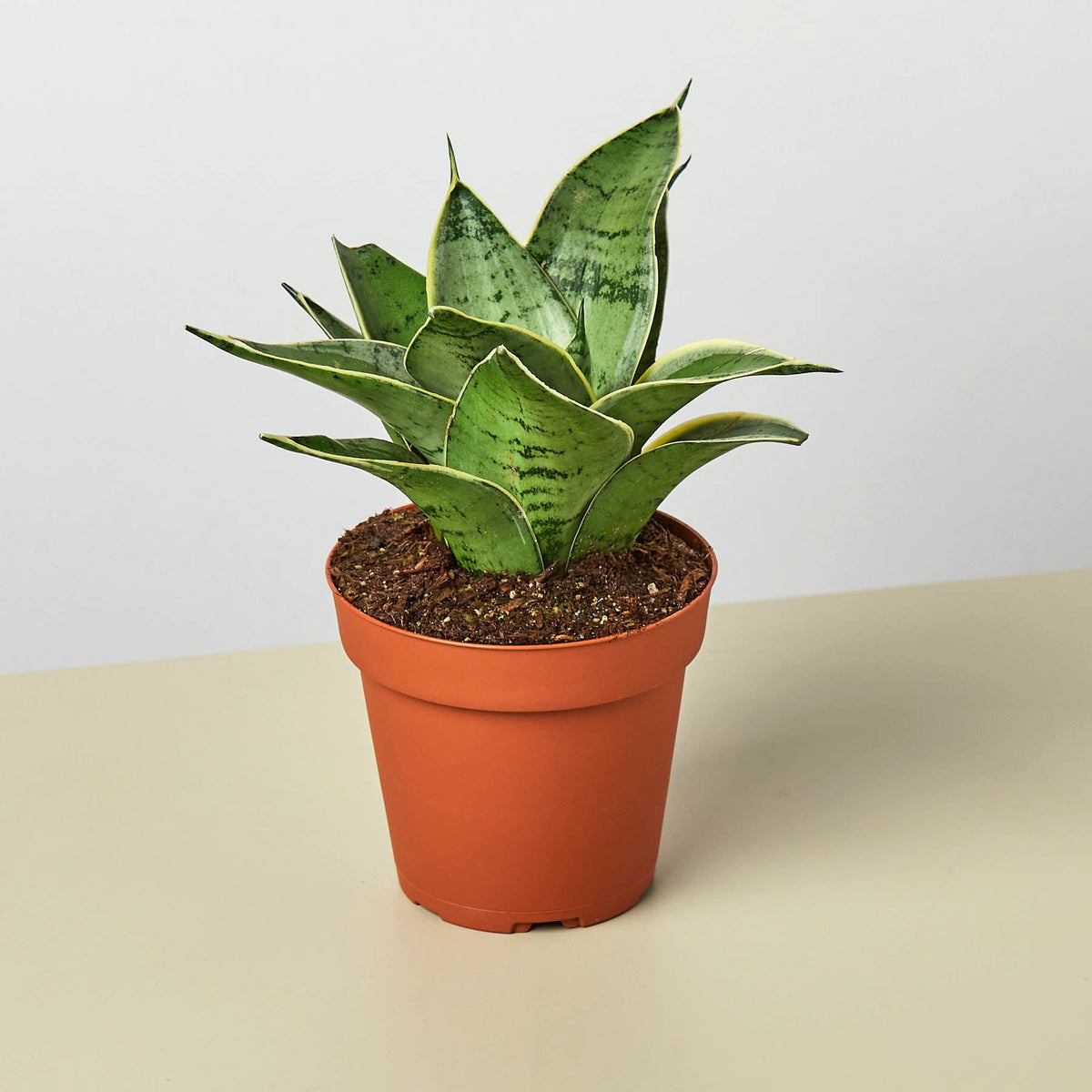
Snake Plant 'Starlight' (Sansevieria trifasciata 'Starlight' / Dracaena trifasciata)
Snake Plant 'Starlight' (Sansevieria trifasciata 'Starlight' / Dracaena trifasciata)
Regular price
$15.99 USD
Regular price
Sale price
$15.99 USD
Shipping calculated at checkout.
Quantity
Couldn't load pickup availability
Add striking, luminous architecture and heavy-duty physical stamina to your naturalistic enclosure with the 'Starlight' Snake Plant. Distinguished by a bright silvery, grey-green leaf blade edged with pale whitish-tan to cream borders, 'Starlight' provides an eye-catching contrast against dark bioactive substrates and cork bark backgrounds. Engineered by nature for resilience, its rigid, sword-shaped leaves act as trample-proof climbing scaffolding, vertical sightline barriers, and shaded microclimates capable of withstanding active, heavy-bodied reptiles.
Bioactive & Husbandry Benefits
- Trample-Resistant Climbing Architecture: Thick, fibrous, leather-like leaves easily bear the physical climbing and burrowing weight of heavy-bodied snakes, juvenile boas, and active geckos without creasing, snapping, or pulling loose at the crown.
- Luminous Sightline Breaks & Thermal Shade: Pale, reflective sword blades break up open terrain across the enclosure floor, reducing territorial stress while casting ground-level shadows for natural thermoregulation.
- Exceptional Low-Light & Drought Forgiveness: Adapts smoothly across low-to-moderate vivarium light gradients and shaded understory corners where demanding tropical plants fail; easily tolerates deep substrate dry-outs.
- Subterranean Substrate Anchoring: Expansive rhizome networks bind loose bioactive soil mixes together, creating protected sub-surface pockets where arid and temperate clean-up crew colonies (isopods and springtails) can congregate and shelter.
- Safe for Insectivores & Carnivores: 100% spineless and free from caustic milky saps or eye-irritating glochids. (Husbandry note: Like all sansevierias, the foliage contains natural bitter saponins that deter plant-chewing pests; it is safe for non-herbivorous reptiles, amphibians, and invertebrates, but should not be housed with plant-eating herbivores like tortoises or uromastyx).
Habitat Specifications
- Light Requirements: Low to bright indirect vivarium LED lighting. (Moderate-to-bright illumination keeps the pale borders and bright silver tones saturated; position away from direct contact with high-heat basking bulbs).
- Humidity Range: 30% – 70% (exceptionally versatile across arid, semi-arid, temperate, and well-ventilated sub-tropical habitats).
- Substrate & Moisture: Requires an open, free-draining substrate mix (such as ABG mix, organic topsoil blends, or gritty sand/clay mixes). Water deeply at the root zone only after the soil has completely dried out; avoid prolonged moisture pooling in the leaf crown.
- Enclosure Placement: Background anchor, corner screen, or midground structural divider to partition open enclosures.
- Ideal Inhabitants: Ball pythons, corn snakes, Western hognose snakes, king snakes, juvenile boas, leopard geckos, crested geckos, tarantulas, and bioactive clean-up crews.
- Structural Durability: Exceptionally High; among the most physical-wear-tolerant live plants in herpetoculture.
Bioactive Prep Tip: Gently bare-root the plant to rinse away all commercial greenhouse potting soil, thoroughly wash the smooth blades and rhizomes in clean, dechlorinated water, and inspect the roots prior to planting directly into your bioactive enclosure.